
Washington Seeks to Narrow India’s Strategic Horizon
The U.S. aims to weaken India’s partnerships with Russia and Iran.

Yuriy Mavashev, Director of the New Turkey Research Center, argued that India’s decision not to allocate funds for the development of Iran’s Chabahar Port in its 2026–2027 budget is part of Washington’s strategy to undermine the International North–South Transport Corridor (INSTC).
In an analysis published by Russia’s leading diplomacy outlet Vzglyad, it was noted that under the guise of strengthening trade ties with India, the U.S. seeks to erode New Delhi’s strategic partnerships with Moscow and Tehran.
Trade Concessions and Oil Policy
Mavashev highlighted that Washington’s reduction of retaliatory tariffs on Indian goods from 25% to 18%, along with the cancellation of additional duties introduced in 2025, was not without conditions. He described this “unprecedented generosity” as a response to India’s supposed readiness to halt purchases of Russian oil. U.S. media, he added, has been shaping the perception that Prime Minister Narendra Modi deliberately abandoned energy cooperation with Moscow, interpreting his government’s social media posts accordingly.
Kremlin’s Position
The analysis also cited Kremlin spokesperson Dmitry Peskov, who emphasized that Moscow had received no signals from New Delhi suggesting a halt in Russian oil supplies. Mavashev noted that Russia views U.S.–India dialogue as a separate process, independent of the Russia–India strategic partnership.
Corridor Rivalry
According to Mavashev, Washington is attempting to encircle India not only through oil trade but also via logistics corridors. He pointed out that the U.S. is seeking to revive the “India–Middle East–Europe” (IMEC) economic corridor as an alternative to China’s Belt and Road Initiative, but its real aim is to obstruct the INSTC, which involves Russia, India, and Iran. “This is the collective West’s attempt to redraw the trade route map of the entire Middle East,” he wrote.
Chabahar Port Funding Halted
One of the most striking points in the analysis was India’s decision not to allocate funds for the Chabahar Port in its 2026–2027 budget. According to NDTV, the move is linked to growing tensions between Iran and the U.S. and mounting sanctions pressure.
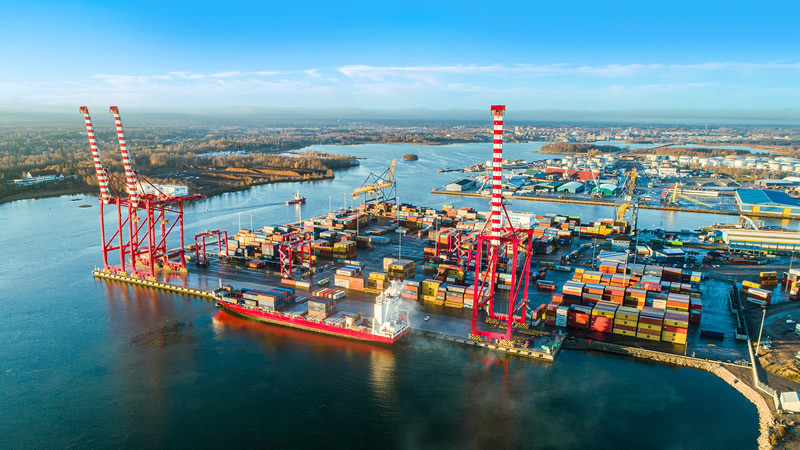
Mavashev described the Chabahar case as “just one episode in Washington’s long-standing efforts to deprive New Delhi of strategic perspective and autonomy.” He stressed that the port is a critical maritime hub for the INSTC, enabling India to bypass Pakistan and connect directly with Central Asia, Afghanistan, and Russia.
“Apparently, the U.S. has decided to narrow India’s trade horizon,” Mavashev concluded, adding that Washington’s policy of severing ties between India, Iran, and Russia is a state-level strategy that transcends administrations: “Biden pursued it in 2023, and Trump continues it in 2026.”